

|
|
|
| Lancia at the 60th Frankfurt International Motor Show | ||
 |
|
|
| Added 26 August 2003 | By Huib Geurink | |
|
Lancia at the 60th Frankfurt International Motor Show The world of the Lancia Ypsilon The exclusive world of the Ypsilon
Unique examples of Lancia's art Lancia at the 60th Frankfurt International Motor Show Lancia offers visitors to the Frankfurt show a stand of huge stylistic and architectural allure. The exhibition area of more than 1500 m2 is designed to involve the public on different levels and allow visitors to appreciate the entire Lancia range while also experiencing the emotions that the brand claims as its own. You can begin by enjoying the exclusive world of the new Ypsilon and the Lybra Emblema SW, so reminiscent of the Sixties. And go on to admire our show car, the Lancia Fulvia Coupé and two non-standard models created on the base of the Phedra and Thesis. These unprecedented cars whisk us back in time to the Seventies, when the Fulvia Coupé 1.6 HF tore through the streets of Montecarlo to win the prestigious rally. It is in Lancia's Italian genes to produce models that are icons of their own time and often look to the future with their cutting-edge mechanical solutions. And all this out-and-out innovation is packaged in an unmistakable design that makes it impossible to miss a Lancia car on the road, today just as in the past. All this breeding and technology is evident at the Frankfurt Motor Show, where the area devoted to the Ypsilon is particularly attractive to visitors. In the background, you can see the Lancia building with the 'Via del lusso" and in front of you the Piazza Italiana, with innovative flooring made out of river pebbles embedded in resin. Here customers can stroll around and shop for all the world as though they were in an exclusive street in Rome or Milan. Or hang out at the exclusive and very special Terrazza Martini on the first floor of the Lancia building where they can enjoy a privileged view of the stand. A fountain playing next to the Terrazza Martini adds the flavour of a Roman street café and conjures up memories of the famous Trevi fountain. A New Dolce Vita thus takes shape through an ingenious interplay of hints and citations. The two showcases that look out over the piazza would not look out of place in the stylish shopping streets of Via Condotti in Rome or Via Montenapoleone in Milan. Here details of the car such as its grille and steering wheel nestle with other top-quality luxury items. The Lancia Ypsilon is the jewel in our crown. You can admire the car in a third showcase, just as is happening currently in Corso Como in Milan, where we have opened the house of 'Miss Ypsilon', a virtual character in a real world. We did the same thing a few months ago for the Lancia Thesis in Via Montenapoleone in Milan. The exhibition area also houses a glass case containing the new 1.3 16v Multijet engine. Last but not least, a Lancia boutique containing top-quality items looks out over the piazza. This is the sophisticated setting for a film entitled 'Fascination Ypsilon' that beautifully encapsulates the world of the Dolce vita, with an irreverent, modern slant courtesy of Lancia. The Ypsilon area also includes a Lybra Emblema Station Wagon. This is the version for people who wish to complement the style of the model with a touch of originality and class, plus retro details reminiscent of great cars of the past. A single glance will tell you that the Lybra Emblema contains hints of the 1963 Flaminia Coupé: that unmistakable two-tone body, those seats in soft tobacco leather. To sum up: a legend reborn forty years on. So much for the part of the Lancia stand that re-evokes the Dolce vita courtesy of the new Ypsilon; another area that takes us back in time to the Seventies is just as appealing. The stars of this area, with its elegant travertine marble floor, are the Lancia Fulvia Coupé show car and two special production cars, the Phedra Promenade and Thesis Promenade. These three models sum up the atmosphere during the years when the international jet set migrated between the Dolce vita of Portofino or Versilia and the glamour and excesses of Montecarlo and the Côte d'Azur. Guest of honour at the show is the Fulvia Coupé show car. This stands in the centre of a small artificial lake, virtually suspended over a pool of water fed continuously by a water chute behind the prototype. Water, the life-giving liquid, is the theme of this part of the stand and a Water Bar offers a choice of fifty different labels to thirsty visitors. This quirky bar goes very well with our gallery of products from the Seventies. Visitors can browse among glass cases to admire lamps, sunglasses, televisions and a host of other items that were typical of those years and contributed to the development of Italian industrial design. Against this backdrop of creative ferment, Italian car design was making its name in the world for its elegance and innovation. Many of the four-wheeled works of art from that period bear the name of Lancia: from the Flavia to the Fulvia, the Stratos to the Beta HPE. Now the same will to try something new has returned with redoubled vigour to the Lancia Style Centre designers, who have taken up the gauntlet with new enthusiasm. Our original concept cars, the Granturismo and Stilnovo (introduced at the Geneva and Barcelona Motor Shows respectively) are now followed at the Frankfurt show by the debut of the Fulvia Coupé show car and another two unique versions: the Thesis and the Phedra Promenade. The world of the Lancia Ypsilon A car that seduces through sheer good looks and elegance. A car that sets new standards of luxury and class in the compact car category. Meet the new Lancia Ypsilon, heir to a successful model that has won the hearts of more than 1,800,000 European customers since 1985. The new car represents the state of the art in the exclusive compact car segment. It is designed for sophisticated customers who are on a constant quest for unique products, who love to stand out in a crowd and seek the satisfaction above all else of driving a car. And, like all the best Italian luxury products, the Lancia Ypsilon blends outstanding style with cutting-edge technology. This winning combination is complemented by highly sophisticated good looks that give a new feel to the famous Lancia shape, perfectly matched specifications and many customisation possibilities. And more. The new car is set to win over the market with an understated charm that strikes a clever balance between stylistic sophistication and a good equipment specification. The most innovative feature of the new model is its Multijet engine. This can be combined with the D.FN System (D.FN stands for Dual Function) robotised gearbox that combines the running costs of a diesel with the dynamism of a petrol engine; the satisfaction of a manual gearbox with the convenience of an automatic. Lastly, a set of prestigious equipment features make this car a veritable pocket flagship: from its sweeping Skydome roof to a dual zone automatic climate control system and Bose® Sound System Hi-Fi Lancia packs this wish list into four rules of seduction that make the Ypsilon into a real object of desire:
The car captivates at first glance for its original style that is rooted in the past, flourishes in the present and sets the trend for the future. The result is a car with an original profile, fully in keeping with new demands for a softer, more sensual and feminine shape. The most striking thing of all is the unmistakable Lancia sense of breeding. The sculpted front, for example, reveals a pleasing symphony of shapes, all dominated by a large upright grille. The light clusters are gem-like and clean-shaped in line with the style philosophy that typifies new Lancia cars. Compared to the Lancia Y, the Ypsilon is thus apparently more imposing, more up-to-date and more appealing. The same consistency of styling makes the interior an emotionally involving environment, a true lounge yet also an up-to-date and functional interior to assure an extremely comfortable trip for driver and passengers alike. These sensations are aided by the particular care that has gone into the details, the use of top-quality material and the creation of sophisticated, stylish colour matches between the body shades and interior trim colours, a unique feature for this segment. This innovative style is also borne out by the new Ypsilon logo. The logo, designed by the Carrè Noir advertising agency, is a natural extension of the Y motif yet also a metaphor for the new level of style and content achieved by the model compared to the previous Lancia Y. The lettering has been expanded from the individual letter used on the previous car (i.e. a Y) to the word denoting the Greek letter in cursive writing: Ypsilon. The end result is a succinct, distinctive, stylish logo with an extra touch of femininity and non-conformism. And so from design to engineering. The revolutionary power units and gearboxes available for the Lancia Ypsilon represent the cream of present-day engineering. The Lancia Ypsilon owes its great road capability, perennially predictable behaviour and driving ease and satisfaction to the performance delivered by the four power units available. The first two are the tried and tested 60 bhp 1.2 unit and 80 bhp 1.2 16v unit, shining examples of how relatively small cylinder capacities can deliver great torque and fluidity. The other two engines are new: a 95 bhp 1.4 16v and the revolutionary 1.3 16v Multijet. The 1.3 16v Multijet, in particular, develops a maximum power of 70 bhp at 4000 rpm while torque is 18.4 kgm at 1750 rpm. The power unit, a monument to high technology, is enclosed in a one-piece block measuring less than 50 cm in length and 65 cm in height. It is in fact the smallest four-cylinder Common Rail diesel engine available on the market. The only power unit that can pack no fewer than six normal-sized components into a cylinder with a diameter of less than 70 mm four valves, one injector and one spark plug. Not to mention the fact that the new power unit already meets Euro 4 emission limits. Lancia proudly presents its 1.3 16v Multijet engine combined with a manual gearbox or a D.FN System robotised sequential gearbox. This is a conventional manual gearbox fitted with an innovative transmission system. The D.FN System gearbox works in two modes: the customer can opt for semiautomatic operation by engaging gears by means of a lever on the tunnel. Or the gearbox can be set to automatic. In the latter case, the driver can choose one of two strategies: Normal and Economy. In addition to the 1.3 16v Multijet, the new model also offers a 95 bhp 1.4 16v. This is the latest addition to the Fire range - and also the highest performer. The new engine offers a cylinder capacity of 1368 cc and a 4 cylinder in line configuration with bore of 72 millimetres and stroke of 84 mm. The four valves per cylinder are driven directly by a twin overhead camshaft. The power unit was developed with particular attention to performance and fuel consumption, an area where the Lancia Ypsilon excels in its category. The 1.4 16v engine also meets Euro 4 emission requirements. Whichever you choose, the Lancia Ypsilon will be the ideal car in city traffic or over long and short out-of-town trips. The third rule of seduction highlights prestige materials and 555 ways of experiencing the Ypsilon. Once you have been charmed by the stylish interior, inside you will find a delightful blend of elegance and innovation. You will appreciate the craftsmanship that is always a feature of Lancia cars and also note the use of top quality materials: from exclusive two-tone leather to exquisite Alcantara®, soft velvet and nautical Glamour cloth. The model's exclusivity comes from this very blend of colours, fabrics and materials. It is no exaggeration to claim that anyone can find an Ypsilon that suits his or her requirements and tastes to perfection. Apart from anything else, the new model range comes in three specifications (Ypsilon, Argento and Platino) and is one of the most comprehensive in the segment. One of its main benefits is the great potential for customisation. The pocket flagship can offer no fewer than 555 combinations, achieved by matching eleven body colours, six different interior trims (available in eight different shades) and five types of alloy wheel (including the versions available from Accessories). Whatever your choice and level of customisation, the Lancia Ypsilon is always appealing and original, and oozes the Italian flair that is famed throughout the world. The new model also offers a set of exclusive devices that set it at the pinnacle of its category: one example is the Skydome (an option), a large glass sunroof that represents a first for this segment and offers a new way of experiencing car travel. The Lancia Ypsilon may also be optionally fitted with a Bose® Hi-Fi Sound System (standard on the Platino version) that is built by the US company. The sound wraps around all the occupants and gives them the sensation that it is travelling through a much larger environment, because the sound system and the passenger compartment have been designed together to ensure perfect harmony between the technical specifications of both. The Lancia Ypsilon also comes with a sophisticated climate control system that automatically controls temperature, airflow, air distribution (differentiated into driver and passenger zones for the first time), compressor activation and recirculation by means of an electronic control unit. The car also offers a wealth of other features that set it at the peak of its category: in the safety field, 4 airbags as standard (two front airbags and two window bags), sidebags, ABS with EBD, ESP with Hill Holder and Brake Assistance. And also: Dualdrive, an electric power assisted steering system with City function; cruise control that maintains a set cruising speed; windscreen wipers that activate automatically at the first drops of rain; headlights that come on as soon as you enter a tunnel and - last but not least - a sensor to aid parking manoeuvres. The exclusive world of the Ypsilon The Ypsilon is Lancia's answer to the desires of customers with sophisticated tastes who love to treat themselves to the little pleasures that make every moment of their day unique: a designer bag or an exotic holiday, a designer item or a dinner in a top restaurant. Lancia has put together exclusive events throughout Europe, such as parties that ever so slightly cross the boundaries of transgression, Ciak&Drive in Italy and some innovative campaigns that are based on viral marketing techniques. The aim: to present the Ypsilon and also the world of values that gave rise to the model and that it interprets. To highlight the ways in which the car's personality is expressed and distinguishes itself from the competition. In short, to show potential customers that even cutting-edge automotive engineering can observe the canons of Italian style that are known and loved throughout the world. The Ypsilon offers such customers luxury and exclusivity. It assures comfort, a carefully selected interior environment, performance and advanced technology. Without ever forgetting the strong values that form part of Lancia's historical heritage and tradition. It really does require a good eye to appreciate the beauty and appeal of history re-interpreted for a modern audience.
The house of 'Miss Y' We began by putting the Lancia Ypsilon on show for the world to see: so that it can be admired in all the right places. In Corso Como in the heart of Milan, for example, we have opened the house of 'Miss Ypsilon', a virtual character in a real world. Miss Ypsilon's garage naturally contains a Lancia Ypsilon.
Life's little pleasures from Ypsilon From 26 June, Lancia's pocket flagship will star in a bubbly and original promotional campaign created by Agenzia 515 of Turin. The campaign will unfold in the major Italian cities (including Bologna, Florence, Milan, Turin, Bergamo, Brescia and Padua), followed by many other European locations before the sales launches planned for individual countries. The campaign is based on viral marketing techniques that owe their name to the way messages about a brand are circulated spontaneously as part of a chain reaction. This intriguing form of Chinese whispers spreads a concept rather than a particular product. The campaign aims to involve a young target in an unusual, stylish and irreverent way ahead of the conventional press and TV campaigns. The campaign will arouse desire for and curiosity about the Y logo and allow potential customers to discover the values Lancia wishes to convey for its new pocket flagship: exclusivity, class and elegance. The Lancia Ypsilon is, all things considered, a great little pleasure that will be difficult to resist. More specifically, the operation will involve disseminating and distributing short messages in places frequented by potential customers. These are clever compliments or messages of enticement, true Y-style temptations, written on clear electrostatic PVC stickers to ensure they do not leave traces and can be easily removed. The stickers will be attached to the cars of potential customers and will bear the Y symbol along with fun messages such as: 'Wherever we are seen out together, heads will turn'; 'Discover the pleasure of allowing yourself to get carried away'; 'You and me make an irresistible pair'. Potential customers may even find a fuchsia-coloured magnet on their cars with a screen-printed PVC disc that reads: 'I'm already yours and you don't know it', Choose me. You deserve it' and 'Give yourself a treat. Come away with me'. Another campaign, recently concluded, involved leaving messages of love, folded in four, under people's windscreen wipers. This was a nice way of letting people feel the emotion and pleasure of being enticed by short messages that were apparently hand-written. Above the Y logo, people would read one of the following messages: 'I couldn't ask for more. You are my ideal woman'; 'I saw you and said to myself: this town's not bad'; 'I breathed in your perfume and decided to stay around'. The game of seduction, always cleverly and irreverently couched, continues with the 'give a rose' campaign. This will be played out by attractive, stylish young men who hand out flowers to women together with a note: 'My mother wouldn't like you. You're the perfect woman'. Or: 'I saw you and I thought: this town's not at all bad'. Another viral marketing campaign will take place in trendy venues and involve leaving car keyrings on the ground. People who pick them up will find this message on the keyrings: 'Choose me, you deserve it', and the internet address www.sbadatasempre.it. This attractive site communicates emotions and suggestions in line with traditional Lancia values. In addition to this advertising material, the innovative campaign will use glass stickers to drive our message home on the best shops and venues in Bologna, Florence, Padua, Bergamo, Brescia, Milan and Turin. And more. Inside each sales point or venue you will find flip books, i.e. small books containing a sequence of images on the subject of small temptations. Five topics are covered: 'Free to relax', 'You can't resist me', 'Allow yourself to get carried away', 'Discover pleasure', 'Indulge yourself in everything'. In selected popular venues you will also find sugar sachets and coasters bearing the Ypsilon logo and one of the following messages of temptation: 'To sin is human, to persevere is divine'. 'Give in! Give in! Give in!' and 'The only real sin is not sinning'.
Sinning Parties and 'Ciak&Drive' The Lancia team has arranged a host of events that will precede the first model deliveries planned for the second half of September in Italy and about one month later abroad. This will allow the Lancia Ypsilon to consolidate all the qualities of style, prestige, class and exclusivity written into the Lancia DNA in the eyes of the public. In Italy, for example, we have planned Sinning Parties in five popular locations: Albenga, Forte dei Marmi, Venice, Milano Marittima and Porto Cervo. Of course we will be present at the most highly regarded venues (Essaouira, Bagni Annetta, Molocinque, Papeete Beach and Villa Mora). In these spots, you will be able to rub shoulders with famous personalities as you get to know the Lancia Ypsilon and its exclusive world to the accompaniment of DJs and vocalists of international renown. The events will be covered by the slogan: 'The only real sin is not sinning'. Similar events have been planned in Europe. In Germany, for example, we arranged a joint venture with the TV series 'Sex and the City', that took us to the heart of the world of the Ypsilon, its customers and their lifestyle. For seven evenings over July and August, the car will be premiered at certain exclusive venues. More TV joint ventures are planned for September. In Italy, traditional promotional events in the main popular tourist destinations were backed by a travelling tour entitled 'Ciak&Drive' that offers cinema evenings in the major Italian cities. The public was able to attend drive-ins with maxi-screens offering a capacity of about 200 cars per show and the Italian preview of the film 'Confidence', the latest thriller by director James Foley, with Dustin Hoffman, Andy Garcia, Rachel Weisz and Edward Burns. From 9 am to 7 pm, the drive-in was transformed into an Ypsilon Village where it was possible to conduct test drives and safe driving tests with the aid of a specialised instructor.
Unique examples of Lancia's art While part of the Lancia stand re-evokes the Dolce vita as interpreted by the new Ypsilon, another equally appealing area takes us back in time to the Sixties. Indisputable stars of this exhibition area are the concept car, the New Lancia Fulvia, and two special production models, the Phedra Promenade and the Thesis Promenade. These three unique products explicitly reveal the distinctive flavour of the Seventies, a period of history that was extraordinarily intense and fizzing with new ideas from the viewpoint of fashion, glamour and creativity. Women, for example, abandoned the miniscule handbags of the Sixties in favour of big square shoulder bags with adjustable straps. This was also the time of stack heeled boots and Rayban sunglasses (drop-shaped for him and round for her). Music also experienced a golden age: from the progressive sounds of Yes and Genesis to the disco music of Donna Summer and the glam-rock of Roxy Music, Elton John and Steely Dan. This was the soundtrack to the international jetset that migrated between the Dolce Vita of Portofino and Versilia to the glamour and excess of Montecarlo and the Côte d'Azur: dinner at the Pirate, a Barry White concert at the Salle des Etoile, then on to Jimmy'z and finally a suite at the Hotel de Paris. The true icons of luxury were always Italian: flying over the sea in a Riva motorboat, sipping a Martini and speeding down the coast in a Lancia Fulvia. And that very car, a Fulvia Coupé 1.6 HF, won the prestigious Montecarlo rally in 1972, beating off rivals such as Alpine and Porsche. Lancia Fulvia Coupé show car
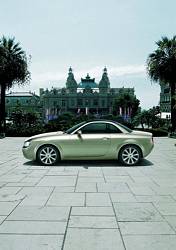
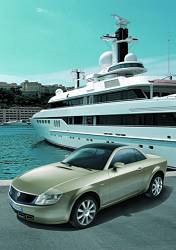
Lancia is one of the very few motor manufacturers than can boast customers who are demanding aficionados of the brand and lovers of beauty yet also great connoisseurs of the most sophisticated technology. A leitmotif links all Lancia cars: a continuous quest for innovation linked to the most exclusive Italian craftsmanship. This driving force is essential not only to the spirit of Lancia but also to the progress of the motorcar per se. The hundreds of patents filed, the brilliant inventions and the practical creations developed by Lancia throughout nearly one century of history bear witness to this. The year was 1965. At the Geneva Motor Show, Lancia introduced the Fulvia Coupé 1.2, a powerful, well-balanced car that was absolutely unique for the mechanical solutions adopted. The model's great strength lay in its engine configuration of 4 cylinders in a narrow V. The front subframe housed the power unit while the front suspension was double wishbone. The braking system featured four discs with a dual hydraulic circuit and brake servo. The Fulvia Coupé was a fine example of the elegant sportiness that has always typified certain models produced by Lancia. It took just a few touches to convert a road vehicle into a racing car. Even now, the public applies the HF tag indiscriminately to the Fulvia Coupé model without distinguishing road cars from cars destined for racing activities. Think back to the legendary Fulvia Coupé Rallye 1.6 HF that won the Montecarlo Rally in 1972 with Sandro Munari aboard and also raced off with the world Brand Championship. The following year, the Lancia model pulled out of official racing and in 1976 the Lancia Fulvia Coupé ceased production after 140,000 had been built. And now, forty years on from the debut of the first Fulvia saloon and thirty-one years after Munari's victory, Lancia has decided to build a prototype to celebrate one of the models that made the brandname famous throughout the world. Apart from anything else, the Lancia Style Centre designers have always had one perennial dream: to recreate the Fulvia Coupé as though it had been left free to evolve without interruption. The approach to the project was very clear from the outset: no nostalgic self-indulgence but a post-modern reworking of the original concept and styling cues. Priority was to be given to a fresh, dynamic shape without losing sight of the intrinsic spirit that made the Fulvia, designed by Castagnero in 1965, an ultra-sophisticated mix of eccentricity, elegance, clean aesthetic lines and sportiness. An absolutely up-to-date coupé, in other words. A car that offered an opportunity to explore aesthetic and engineering solutions that could be used on future Lancia products but also carried great evocative weight for people who lusted after and dreamed of the car in its heyday. The dimensions and three-box shape of the Fulvia Coupé show car are practically identical to those of its predecessor but the track has been broadened to give the car greater stability and strength. The general layout is reminiscent of Riva motorboats of the period, i.e. a truncated tail, an extremely dynamic shape and a furrowing prow. The most distinctive stylist motif, i.e. a continuous horseshoe-shaped band that enfolded the entire body only to emerge at the tail, was reworked to give the car a more dynamic appearance and a tapering shape. The point of greatest tension lies over the front wheel where all the visual weight of the car is also concentrated to underscore the front drive and engine. The end result is that the entire car appears to be pulled along from this point. The drop-shape of the car from above with maximum width at the front and a tendency to taper off toward the truncated tail also contributes to this effect. The shape is complemented by a long bonnet, a small glazed area and a specific weight distribution pattern. The 1965 Fulvia Coupé featured a characteristic lightness of volume that was even more evident at the rear. The new show car, however, is more muscular in appearance but lightened by fact that the lower part of the vehicle recedes toward the tail. The aggressive-looking front features a broad, rounded bonnet, headlights made out of high-tech modules and a wing-shaped 'brow' that extends the bonnet profile visually below the lights. The burnished metal grille that bears the big Lancia shield looks sporty and three-dimensional. It has been deliberately deconstructed and simplified compared to its less aggressive sisters to emphasise the function of the air intake and create a relationship between solid metal and air at the front that reflects the pattern of the previous model. Everything is completed by lines that flow from the bonnet to the bumpers and gather around the lower outlet where four floating quadrangular cylinders hark back to the four air intakes of the Seventies model. The clean sides hinge on a succession of concave and convex surfaces and a sturdy shoulder. The tail, the logical conclusion to the entire shape, marks a return to the cross section of the original model: it would hardly be complete without a deliberate reference to the aft surface that was such a distinctive feature of the previous model and underscored the fleeting tail while providing an unfussy frame for the tall headlights. These features, run though by two cylinders that encircle the body like exhaust pipes, depend for their effect on a transparent covering that reveals how the lamps overhang from the wing-shaped profile (a subtle hint of the expressive 'eyes' so typical of the previous car). The three-coated Ivory body colour offers a harmonious contrast with the dark brown 'Testa di moro' leather that enfolds the passenger compartment. The interior has a decidedly Seventies feel with parts (manufactured using numerically controlled lathes) that are reminiscent of the iridescent controls on hi-fi systems of the period. The Tanganika Frisé wood that covers the central facia insert and tunnel bridge is silky in appearance with a metallic sheen. The interior features two bucket seats and an additional luggage compartment under the parcel rack. Its appearance is inspired by the original, though with a spare post-modern treatment. All the sophistication and sporty touches you would expect from a Lancia of this type are naturally in evidence. Examples include a set of bags produced specially for the show car by Trussardi using top-class original panels that represent an ideal combination between mood and practicality. The facia, made out of two opposing, hand-upholstered shells that embrace the leather insert, appears to be surrounded by a shell that stretches smoothly to the rear of the door panel to underscore a drop-shaped floor plan of nautical inspiration. The tunnel is actually an extension of the dark brown leather trim on the floor that flows fluidly up to form arms that mirror the armrests on the doors. The saddle-shaped theme reflects the formal language of the entire interior. If you sliced through the volume of the tunnel and the side armrests you would see a longitudinal wooden bridge in the centre that houses a gearlever (enhanced by aluminium parts) with looped door pulls on the doors. The overall look is rounded off by a three-dial analogue instrument cluster of nautical design that is pearlised in colour (similar to that of the new Ypsilon). A metal interface plate contains all the infotainment functions and the climate control system as on other Lancia range vehicles. A steering wheel with three metal spokes contains a cylindrical airbag module and a leather-upholstered rim. The sporty, ergonomic seats are reminiscent of those on the Fulvia Coupé because the wraparound horseshoe embraces the backrest to offer broad lateral support. Yet the Fulvia Coupé styling operation was never a mere exercise in design. All the car's exterior parts have been developed to keep down drag. The fruits of this effort are evident in the good top speed of 213 km/h, obtained from a power output that is somewhat restrained for this type of vehicle: 140 kW (103 bhp) at 6400 rpm. Engine lightness is assured by the use of aluminium to create the body. As on all the most up to date sports cars - though some HF versions of the Seventies Fulvia Coupé also featured aluminium bonnet and doors - all exterior body panels are in aluminium. This feat of engineering has been pulled off by calling in the very best hand panel beaters. In this case, the model manufacturer, CECOMP, has done a masterly job. This attention to lightness also allowed the weight to be kept below 1000 kg. The Fulvia Coupé weighs exactly 990 kg, an absolutely outstanding value for this vehicle type. It also guarantees an excellent weight/power ratio (7 kg/bhp) and acceleration from 0 to 100 km/h in 8.6 seconds. All this naturally means reduced fuel consumption: over a combined cycle, for example, fuel consumption never exceeds 7.3 l/100 km. The Lancia prototype is also equipped with a 4 cylinder 1.8 16v engine with variable valve timing and a McPherson front suspension layout with telescopic struts, coaxial coil springs and lower wishbones. Although the geometry is relatively simple, it ensures a dynamic first rate performance aided by Pirelli PZero Nero tyres. The technical picture is completed by rear suspension with longitudinal arms, antiroll bar, braking system with four disc brakes (the front ones are ventilated) and an ABS. No other electronic gadgets have been added, such as antislip or stability control devices, because we did not wish to detract from the purity of the car's wonderful old-style sporty drive. The Fulvia Coupé is fully entitled to a place in the wish list of people who know how to appreciate a car of great personality and charm even if it is a pilot model. Even today, Lancia aficionados are known for the extraordinary passion and enthusiasm that they share with those who design, test and produce Lancia cars. Lancia thanks the following for their help in producing the Fulvia Coupé show car: Alcantara, Akzo Nobel, Aunde Italia, Bose, CECOMP, Frau, IXFIN Magneti Marelli, Mario Levi, Novem, Pirelli, PPG, Radicar, Shafenaker, Sintesi Photo Etching, Tabu, Toora, Trussardi, Zanini. Lancia Thesis Promenade A name that conjures up the Côte d'Azur, the most famous section of coastline in Europe and the indisputable milieu of the international jet set. It is not difficult to imagine the Lancia Thesis Promenade driving along the coast road from Mentone to St. Tropez through small towns and villages of subtle, sophisticated charm. All this is a specific reference to the Côte d'Azur as it was at the beginning of the Seventies when an automobile was all about taste for external appearance and emotion. It was fine to favour form over function and to express your own personality. The half-concealed luxury typical of such cars hit you with full force when you set foot on board: seats like armchairs, authentic materials such as wood, walnut and the unmistakable smell of leather. The special production Thesis Promenade takes us back to that magical atmosphere and the prestigious cars that threaded their way along the French coast with casual elegance. The new version arose out of the Lancia Style Centre's wish to experiment with no particular productive end in view. Its exterior features an original Ivory colour obtained by superimposing three layers of paint (to further emphasise the car's shape and lines) and brand new 18" light alloy wheels with special PAX tyres that keep going even when punctured. These tyres are also reminiscent of the big wheels with tall tyres that distinguished top-class cars of the early Seventies. The final effect is of huge charm and elegance, to all intents and purposes a homage to those splendid cars that carried film stars along the French promenades. Like the exclusive body colour, the Lancia Thesis Promenade body is an emotionally involving place where top-quality materials have been chosen for their tactile and acoustic qualities to create a multisensorial whole that represents the final frontier of the Lancia world. Beginning with ultrasoft leather by Poltrona Frau. This top-quality leather covers the seats and forms an unbroken central band around the passenger compartment. The soft leather comes in a colour midway between tobacco and red. This blends perfectly with the Magnesium-coloured inserts present on the door panels and facia that reflect the colour of the central console. This additional touch of class is beautifully complemented by the seats in the Lancia Thesis Promenade. The seats are the very latest thing in comfort and ergonomics: the soft, rounded front seats ensure maximum comfort and the aesthetic appeal of a luxury environment. Double, riveted seams add a touch of craftsmanship and elegance, while saddle-shaped head-restraints are unmistakably Italian in style. Rear seat passengers will also enjoy all the comfort and gratifying well-being of their own living rooms. Partly because the armchair seats ensure outstanding comfort and partly because the rear passenger room offered by the new Lancia flagship (which boasts a wheelbase of two metres and 80 centimetres) is one of the best in its segment. We realise that not all customers will be driving their Thesis themselves and have taken every step to ensure that such passengers are able to travel with appropriate style and dignity in the rear. Hence the air outlets on the central door panels and the fact that rear passengers can select their own air temperature and output. A big fold-way armrest in the middle of the back seat can house a remote control that is used to adjust the Hi-Fi system. The Lancia Thesis Promenade is equipped with a new 3.2 V6 24v combined with a sophisticated automatic transmission. This power unit is vigorous and, above all, turns as roundly as a six cylinder engine should. It is remarkable for its power output and flexibility, the latter being enhanced by a 5-speed automatic transmission. Power output is 230 bhp (169 kW) at 6200 rpm with peak torque of no less than 289 kgm (29.4 kgm) at 4800 rpm. All you need to achieve remarkable performance on demand, with a torque curve that reaches high levels at low speed. The thing that makes the most difference is the painstaking work that our engineers put in to ensure that this power unit delivers the type of performance you expect from a Lancia. This refinement has been achieved through a myriad of tiny changes to obtain extremely smooth, gradual power delivery without jerkiness during application or release. All this makes for a much smoother drive. Several parts have been revised to achieve this result: from the accelerator control to the injection and ignition times. Altogether, the Lancia Thesis Promenade offers an outstandingly satisfying drive. Top speed is 240 km/h and it takes 8.8 seconds to accelerate from 0 to 100 km/h. The Lancia Thesis Promenade may be a one-off prototype but it still offers the same class and elegance as standard production models, apart from some specific traits. The Thesis range has recently benefited from the introduction of two new engines and other exclusive options. A more powerful (175 bhp) 2.4 JTD 20v engine has now joined the previous 150 bhp 2.4 JTD 10v. The new engine is a member of the second generation of Common Rail direct injection diesel engines known as Multijet engines and is available with a 5-speed automatic transmission or six-speed manual gearbox. The petrol engine range is now topped by a 3.2 V6 24v unit with Comfortronic (as fitted to the Promenade prototype) that is ideal for the Lancia Thesis. The result is a great deluxe saloon with the same standards of roominess, comfort and performance throughout. Both power units feature state-of-the-art technology as one expects from a car made by Lancia, a manufacturer that is always careful to offer customers the most advanced engineering content. Their introduction provided an opportunity to revise the setting of the sophisticated five-speed automatic transmission to ensure smoother gear shifts and hence a considerable increase in driving comfort. The current gearbox has also been replaced by a 40.7 kgm six-speed manual gearbox to accommodate the higher torque delivered by the 2.4 JTD 20v engine. This more compact device comes with three shafts and features a synchronised reverse and a clutch with automatic play take-up device. Two new options that grace the Lancia Thesis range are also inspired by the very latest technology, namely Comfort seats and the Keyless System. The seats are the last word in ergonomics because they offer fully electric adjustment combined with sophisticated functions such as ventilation, heating, adaptability and massage. The Lancia range leader is actually able to recognise its owner through the Keyless System: it unlocks its doors at his approach and allows him to start the engine by turning a knob instead of a conventional ignition key. These new features will help the Lancia Thesis strengthen its position in a segment that contains a restricted number of models into which the most important manufacturers typically seek to pack the cream of present-day automotive technology. Lancia Phedra Promenade Lancia proudly presents Phedra Promenade, a car appropriate to the Seventies theme stand that takes us back to the exclusive atmosphere of Monte Carlo in those years. The Lancia Style centre built this one-off prototype to interpret the aesthetic qualities and lifestyle of those years. Like certain motorboats of the period that represented an ideal blend of Italian class and engineering, the Phedra Promenade is an automotive experience that weds refined style to sophisticated mechanical solutions. The result is a special production car that is identifiable for its original dark brown 'Testa di moro' body colour. This is an explicit reference to the mahogany trim on the motorboats that could be spotted in tourist spots around the Mediterranean and glamorous Monte Carlo in particular. The interior has also been revised for the occasion. New features include the stylish and exclusive Ivory coloured leather and Wenge wood inserts that complement the exterior shade to make sophisticated reference to the world of the Seventies and its motorboats. The car is about much more than mere style. The original outer skin is combined with a powerful, spirited engine that is also extremely satisfying to drive: the 204 bhp 3.0 V6 24v engine comes complete with a sophisticated self-adaptive, sequential automatic gearbox, both available also on standard production cars. The result is outstanding performance (top speed more than 200 km/h), the noiselessness of a 6-cylinder engine, smooth running, urgent pick-up ensured by generous torque, maximum comfort and driving satisfaction. The brand new automatic transmission also offers three operating modes and will also be available on 2.0 jtd engines from July. The device also comes with an electronically managed self-adaptive programme that allows the gearbox to adjust to the driver's style, road profile and vehicle load. All this translates into smooth, slick gear shifts, performance, low fuel consumption and convenience courtesy of the engine brake. A conventional automatic transmission shifts up a gear when you accelerate even when the car is travelling downhill while the self-adaptive device reads the accelerator position and maintains the speed unchanged if the pedal is still raised. When the road is slippery, you can switch to Snow mode where higher gears are chosen to maximise grip. The third function is sequential: the customer shifts through the four gears himself by operating a selector lever that acts like a joystick (up to change up, down to change down). The stylish, original Lancia Phedra Promenade also inherits an extraordinary safety package from the original standard production model. The Phedra recently won the coveted five star rating in the European New Car Assessment Program (Euro NCAP), setting it at the top of its segment for safety. This independent consortium works with the backing of the European Union and the F.I.A. (Federazione Internazionale dell'Automobile). It has been testing vehicle safety since 1997 and allocates a number of stars (1 to 5) on the basis of the results obtained. These five stars are an important acknowledgement that rewards Lancia's great commitment to all aspects of driver and passenger protection above all else. Safety has long been an integral part of the process that leads to the definition of the body and all other components on Lancia cars: including the facia, seats and restraint systems. In the case of the Lancia Phedra, this quest has brought excellent results and now these are borne out by the Euro NCAP ruling. The designers considered all possible accident types to achieve the result: front impact, side impact, roll-over, shunting and fire. The designers also considered the different speeds at which crashes can take place, the different types of obstacle and the safeguarding of occupants with a very wide range of physical features. An in-depth examination of all these parameters led to a set of technical solutions that make the Lancia Phedra one of the safest cars on the market. This total protection begins with all the devices specifically devoted to passive safety that now come as standard: two multistage front airbags, two front sidebags and two window bags protect side passengers on all three rows of seats. The Phedra is also equipped with a passenger presence sensor on the seat (to control airbag activation in case of need) plus buzzers and indicators that indicate whether the front seat-belts are unfastened. And also: three-point seat-belts with pretensioners and load limiters (except on the middle seats in the second row) plus height-adjustable, tilting head-restraints (front). Not to mention a door lock system and Isofix attachments for carrying even the smallest passengers in absolute safety. And if the car crashes, the doors naturally release automatically and the fuel flow is cut off. The Lancia MPV ensures such consistent, predictable on-road behaviour that the driver can get away with making mistakes and emerge from sticky situations with aplomb. On the active safety front the Lancia Phedra offers a braking system with outstanding performance while also benefiting from the most sophisticated electronic devices for controlling the car's dynamic behaviour: from braking to traction. All versions are fitted as standard with ABS plus EBD (Electronic Brake force Distribution) that regulates braking action on the rear axle to prevent the wheels locking and ensure full control of the vehicle under all conditions. Brake Assistance, another standard feature, helps during emergency braking. On vehicles with ESP, on the other hand, the function is carried out electronically by the ABS control unit and is referred to as HBA (Hydraulic Brake Assistance). To ensure greater mastery of the vehicle, all Lancia Phedra cars come with an ESP (Electronic Stability Program). The system cuts in under extreme conditions when car stability is at risk and also helps the driver control the car on bends. The new model is also fitted as standard with ASR (Anti Slip Regulation) to limit drive wheel slip in low grip conditions. This highly sophisticated automatic traction control device works at all speeds to adjust torque according to the grip coefficient. The MSR (Motor Schleppmoment Regelung) cuts in when the gear is shifted down abruptly in low grip conditions. This device restores torque to the engine to prevent the wheel skidding as a result of lock. Many sophisticated devices ensure the dynamic safety of the Phedra. It is governed by a newly-developed and sophisticated smart system that is governed by an electronic control unit. This receives signals from various sensors throughout the car and the control unit then uses these signals to determine which devices should be operated. The Lancia Phedra comes with a particularly effective braking system that ensures prompt, gradual deceleration and also shorter stopping distances. What is more, if the driver suddenly puts his or her foot down hard on the brake pedal, an automatic emergency system cuts in to turn on the hazard lights as an early warning to cars behind. The Lancia Phedra also offers as standard a host of features for superlative customer comfort: map navigation system, dual zone automatic climate control system, interiors in Alcantara® (leather is an option), Cruise Control, headlight wash/wipe and also rain, parking and dusk sensors. Options include gas discharge headlights (standard on versions with the 3.0 V6 power unit and automatic transmission), electric sliding side doors, tyre deflation sensors and triple sunroof.
|
||